
(In)accessible Housing Crisis
in Louisville, KY
The first-ever analysis of accessible housing demand and the failure of supply in Louisville
Disabling Infrastructures
Louisville’s Accessible Housing Gap
Let’s think about “disability” differently.
“Disablement” results from the particular environment in which we find ourselves.
“Disability” typically refers to a problem or deficit with an individual. Often people are disabled by barriers, not their bodies.
Wheelchair users are made “unable” by stairs, narrow doors, and broken sidewalks. These are disabling infrastructures. When housing is inaccessible, it is disabling infrastructure.
The lack of accessible housing is not merely an inconvenience. It is a crisis with public health implications and measurable consequences for tens of thousands of Louisville residents.
On this page, you will find data, testimony, images, and analysis meant to move you and inspire you to imagine a better way.
Housing infrastructure is fixable. Here’s why we need to do it. Start with the report.
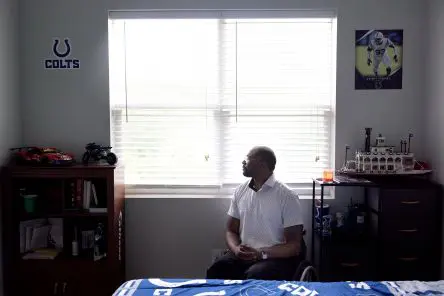
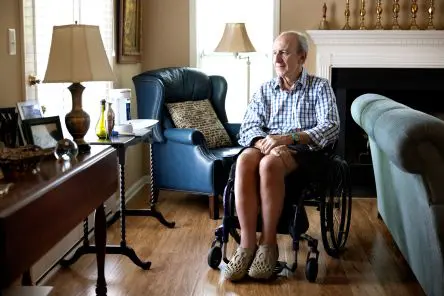
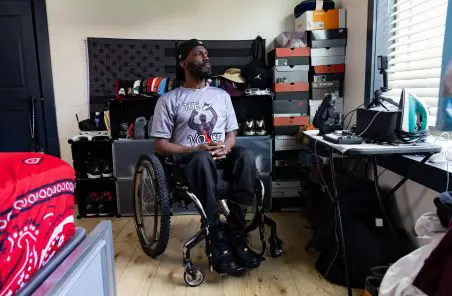
Louisville faces a profound and growing accessible housing gap
Of the city’s approximately 333,000 housing units, only around 3,000 are wheelchair-accessible.
Yet, there are an estimated 18,000 households with a wheelchair user, which means:
6:1
households compete for every one accessible unit.
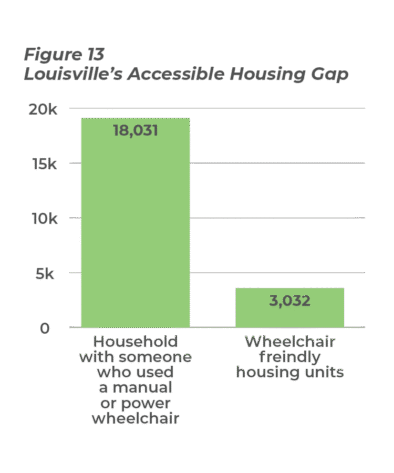
Louisville’s Accessible Housing Gap — households with a wheelchair user vs. wheelchair-friendly units.
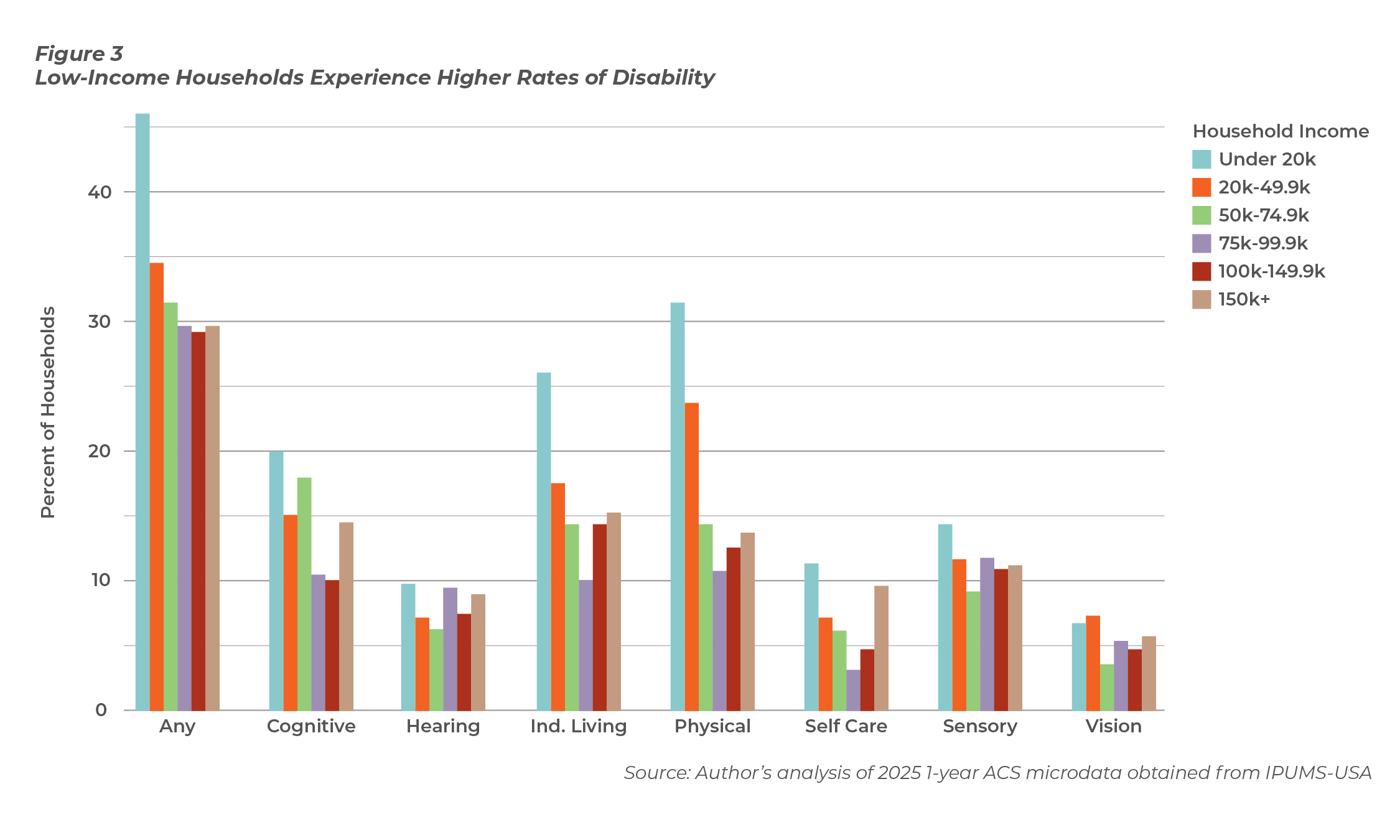
Disabilities breakdown by income — disability concentrates among lower-income households.
The affordable accessible housing shortage is significant, even if harder to quantify.
What we know with confidence is the supply.
Louisville has only 586 affordable accessible multifamily units available to people of any age living on low incomes, compared to roughly 9,000 Louisvillians under age 65 with “ambulatory difficulties” living in poverty.
and only 1,122 accessible Section 202 units are reserved for low-income seniors, and approximately 8,300 seniors aged 65+ with “ambulatory difficulties” living in poverty.
Against any reasonable estimate of need, the number of affordable accessible units is inadequate.
The Accessible Housing Gap is Growing and Should Matter to Everyone
Each one of us is only one car accident, one slip-and-fall, one faulty blood vessel away from becoming a person with a disability.
And if we live long enough, accessibility will matter because disability skyrockets with age.
5x
In Louisville, adults aged 65+ are five times more likely to have a physical disability than those under age 65.
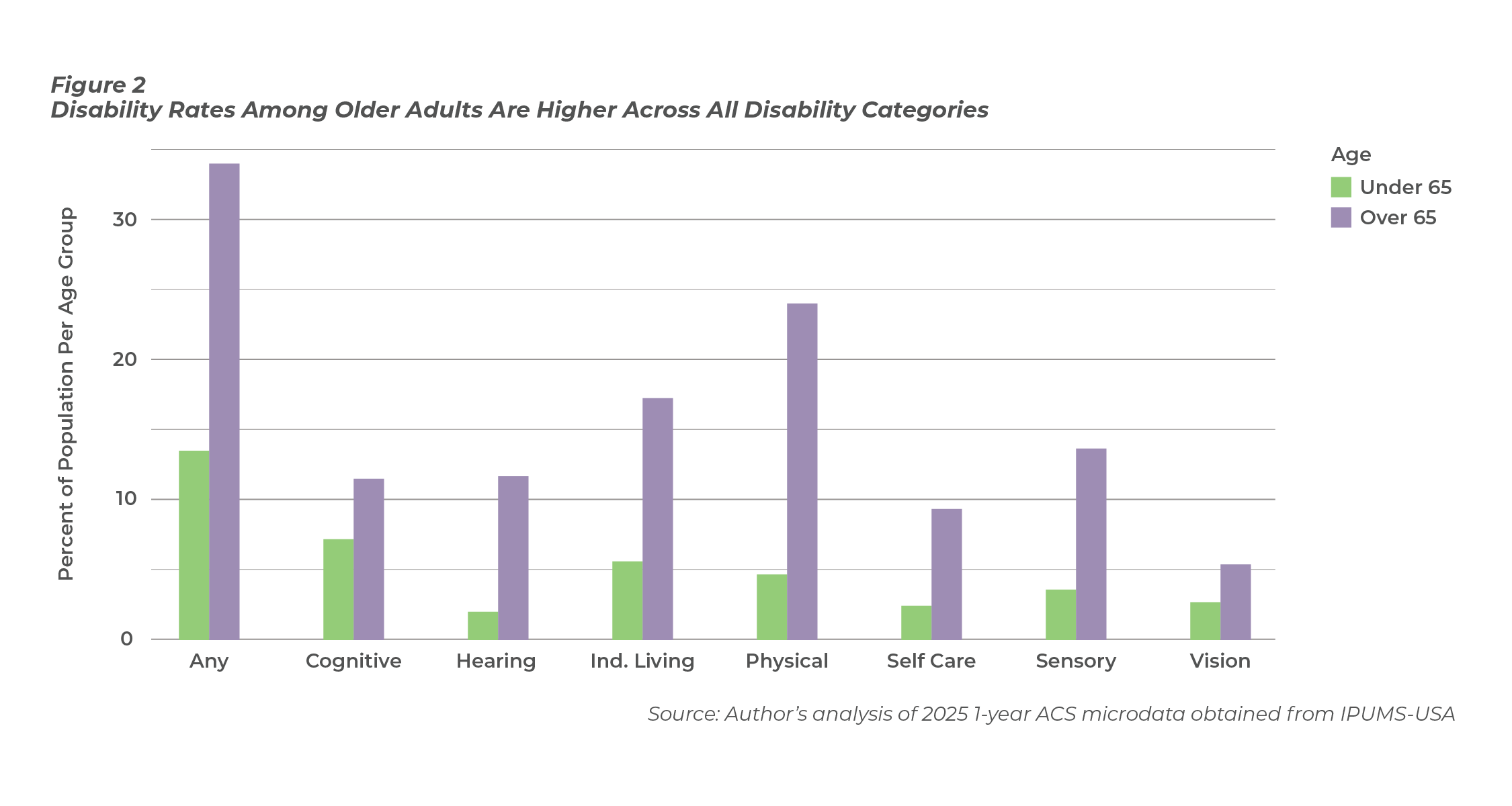
Disabilities breakdown by age — rates rise sharply for people over 65.
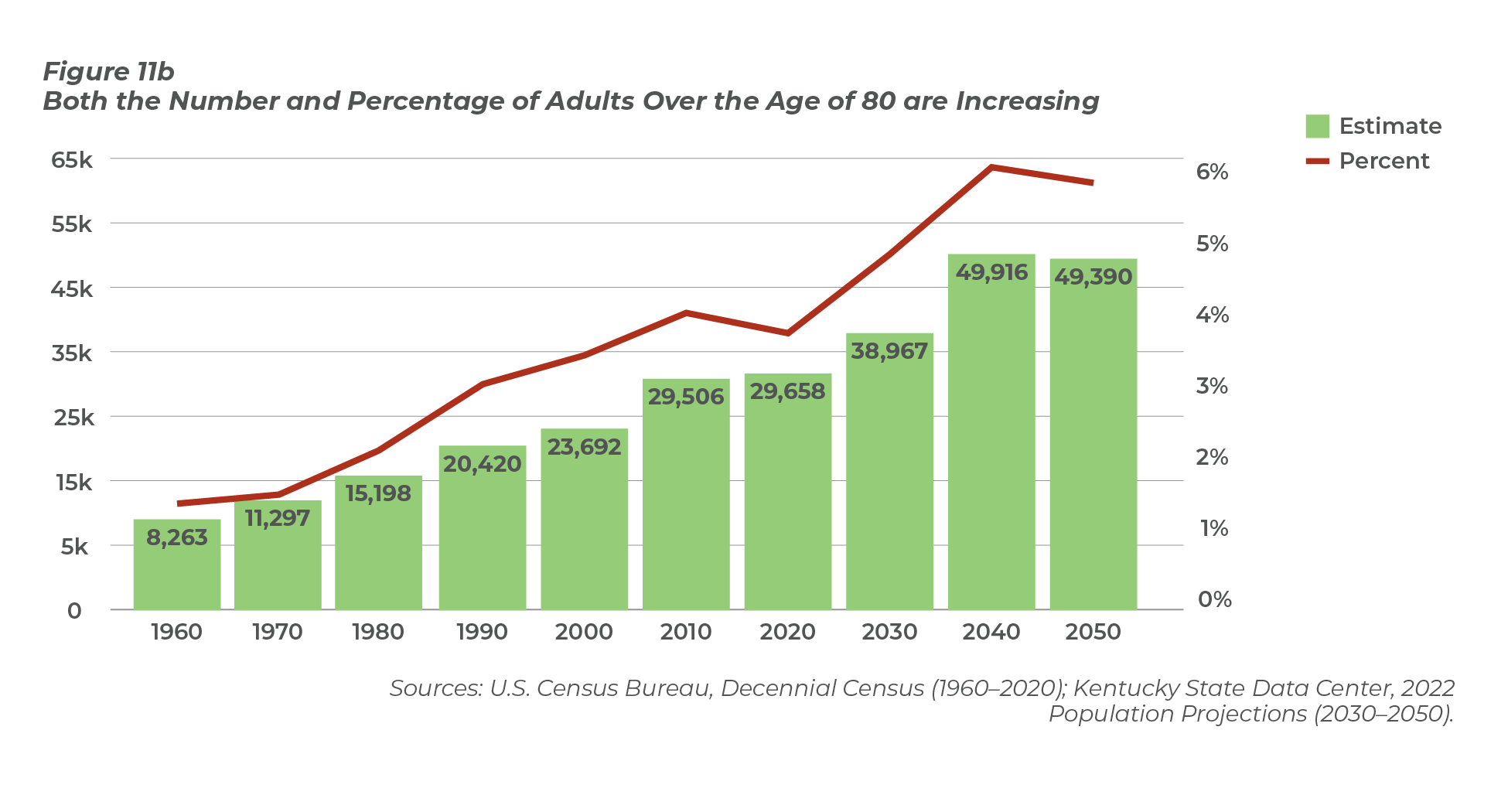
Population aged 80 or older, 1960–2050.
The accessible housing gap is growing as Louisville’s population ages
The number of Louisville residents aged 65+ is projected to increase by 25,000 over the next 20 years. The number of people aged 80+ is expected to grow by 19,000 over the same period.
Disability skyrockets with age. 44% of people 80+ have an “ambulatory” disability compared to 4.8% for people under 65.
Download the report for more information on age and disability projections.
The Impact of (In)accessible Housing

Kaelin

Graham
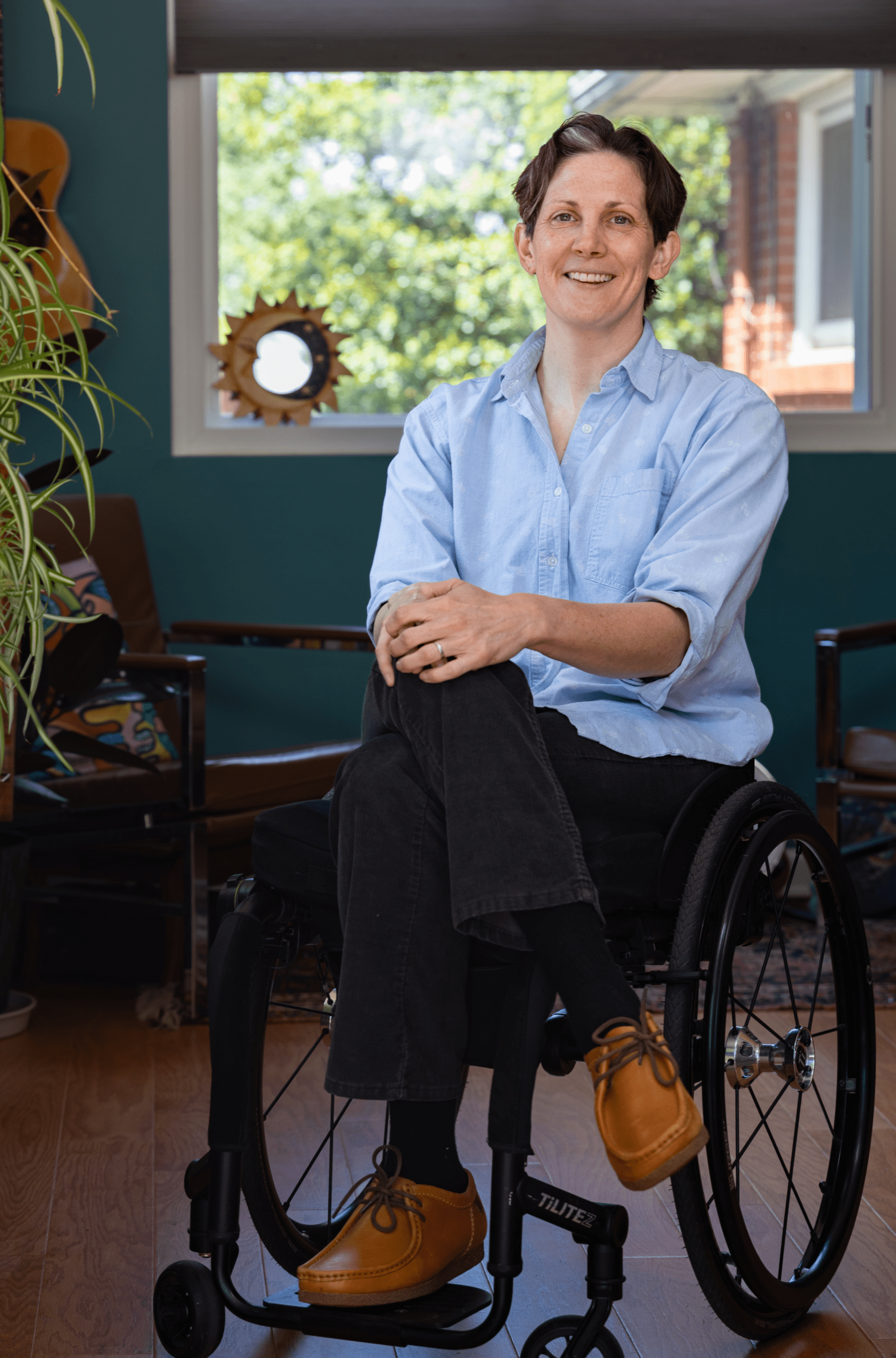
Rachel
Garrison

Terrell
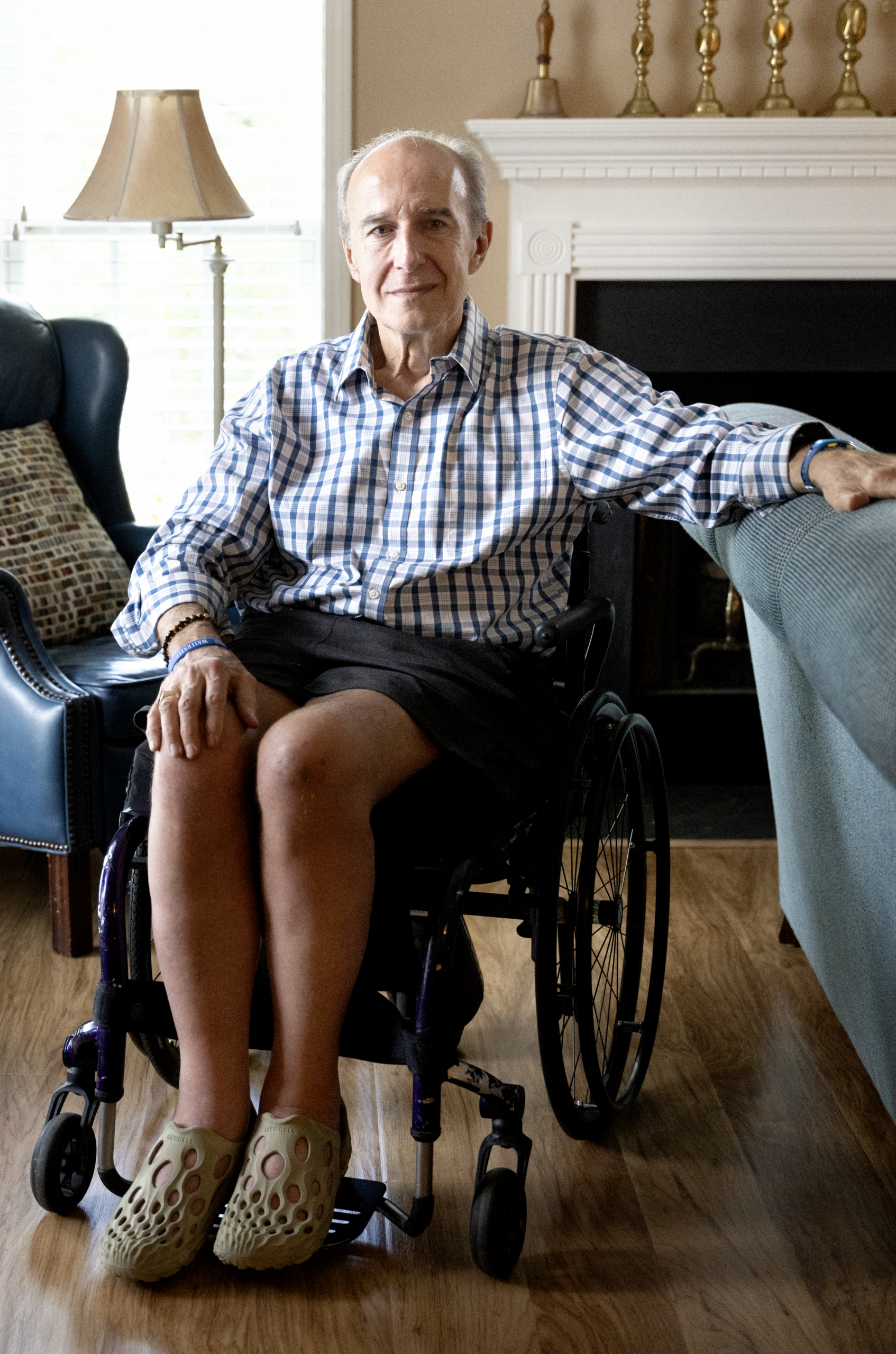
These are the kinds of voices you’ll encounter here. They’ve struggled through the accessible housing gap and are living resiliently in spite of the disabling infrastructures we continue to create. The story of (in)accessible housing is about them, but it’s also about us as a city and society.
(In)accessible housing is a major social determinant of health. Safe, affordable, stable, and suitable housing enables individuals to lead healthy, productive lives and contributes to stronger, more resilient communities.
ACCESSIBLE HOUSING
People with disabilities living in ACCESSIBLE HOUSING experience:
- Less depression
- Fewer injuries
- Lower rates of mortality
As well as:
- Greater independence
- Higher self-confidence
- More community participation
INACCESSIBLE HOUSING:
- increases fall risk
- contributes to poor health outcomes
- Increases costs of healthcare
- Increases nursing home institutionalization
Kentucky ranks among the states with the highest fall rates.
Unintentional falls cost healthcare providers $80 billion in 2020
What Do We Mean by Accessible Housing

Gathering Strength’s report focuses on wheelchair accessibility because households with a wheelchair user are the most clearly defined and documented population for whom relatively established housing standards exist.
Accessible housing in our report includes:
Disability is not evenly distributed
Disability in Louisville is not evenly distributed across the population.
The rate of physical disability is approximately 30% higher among Black residents than for the overall population.
Download the report for more data and graphs showing the intersection of disability, age, income, housing status, and race.
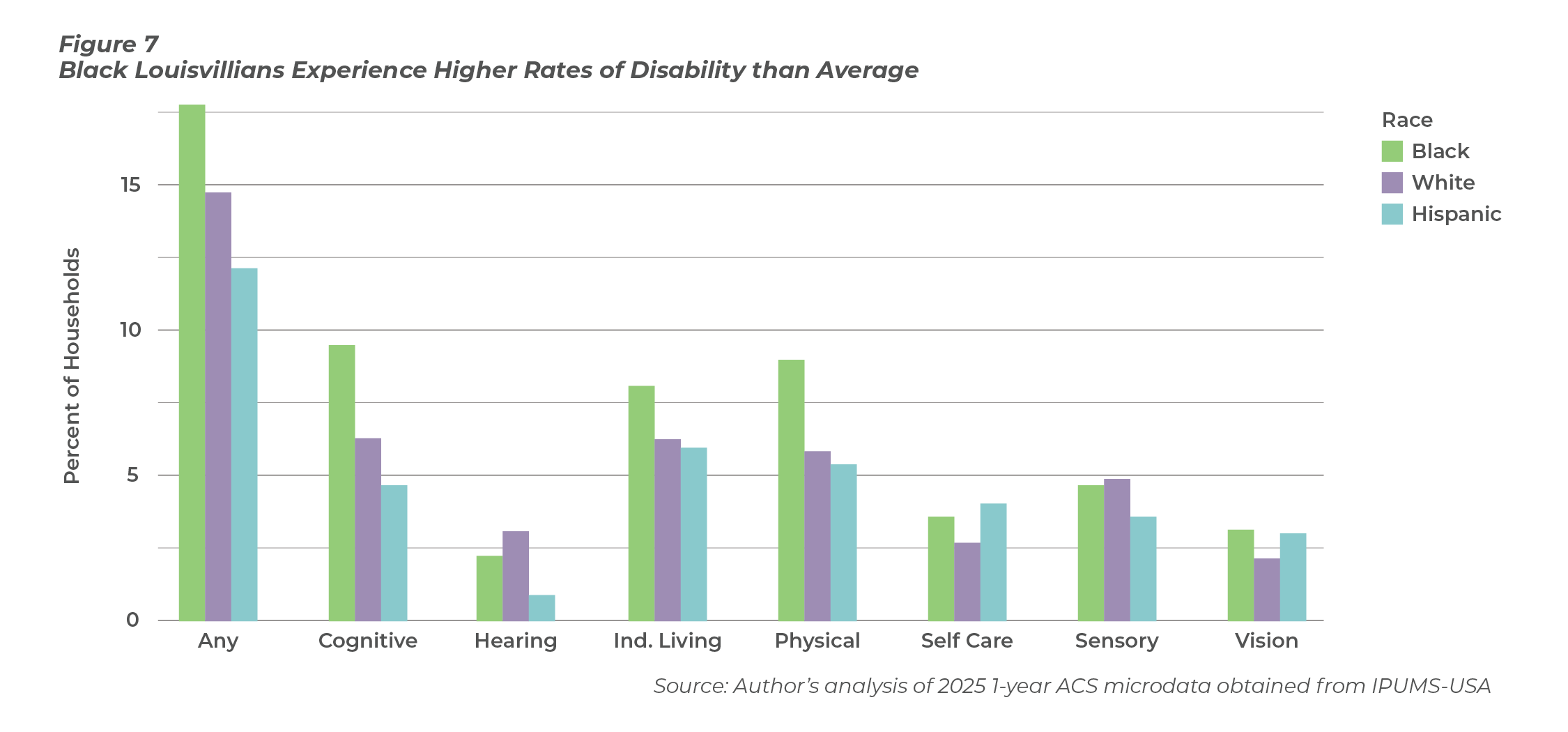
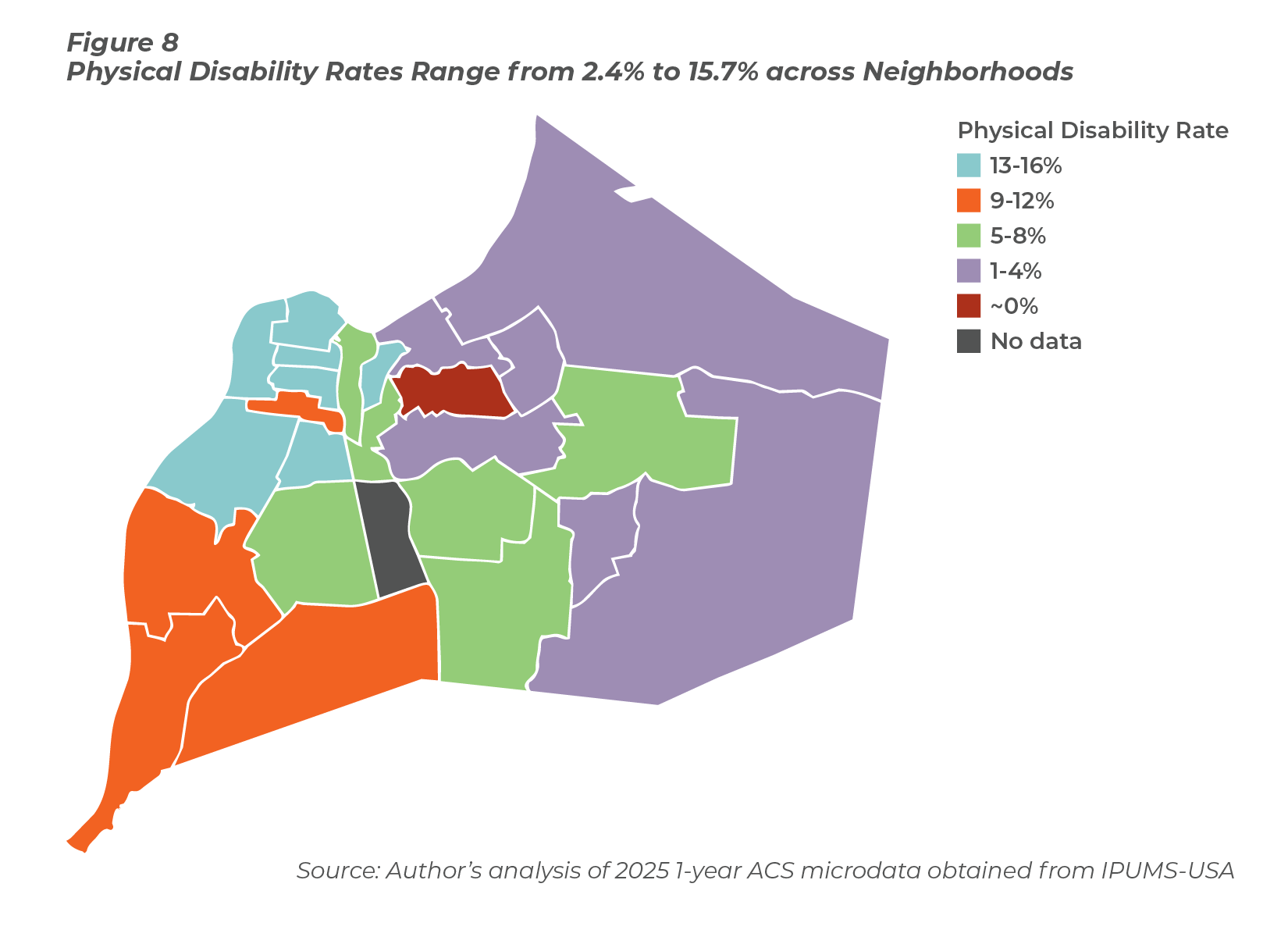
Disability, age, income, and race intersect geographically in Louisville, creating concentrated areas of housing and health inequity.
Disability rates vary widely across Louisville’s neighborhoods, from a low of 2.4% in the Highlands (East of Downtown) to a high of 15.7% in neighborhoods such as Chickasaw and Shawnee (West of Downtown)
As disability rates increase with age and are compounded by economic vulnerability, racial inequities, and geographic disparities, the need for affordable, accessible housing is not only substantial but unevenly distributed across the city.
Immediate Action is Needed to Increase Accessible Housing
1 Build more accessible housing
- Raise the minimum percentage of units required by the building code
- Update the building code to more current accessibility standards
- Motivate the development of more housing and exceed accessibility requirements through funding incentives at the state and local levels
2 Make sure accessible units reach people who need them
- Unit matching mechanisms in affordable multifamily housing to prioritize households that need them
- Track whether accessible units are occupied by people with disabilities
- Fund the development of accessible housing search tools
3 Fund modifications and incentivize the private market
- Scale up home modification programs
- Educate and incentivize private landlords/developers
4 Know what you have and track what you’re building
- Link state and local funding and permitting databases to make unit counts publicly searchable
- Improve national, state, and local disability data collection
5 Include people with disabilities in the planning and decision-making
These are only a few of the policy, advocacy, and funding actions that can be taken immediately to reduce the accessible housing gap.
Download the report to learn more about future areas of inquiry and policy action.
Acknowledgements

The accessible housing gap report was created through a collaboration with the Community Foundation of Louisville’s Data and Policy Center.

The accessible housing gap report was funded by the Robert Wood Johnson Foundation‘s Local Data for Equitable Communities grant.